



Experiment 01
Character consistency
How do you maintain a recognizable character across multiple shots?
A six-part promotional series for a technology solutions and managed IT services provider, developed, produced and edited with an AI-assisted workflow.
Create a polished promotional video series without relying on a conventional production model. Six videos, one series, one recognizable brand.
Humour up front, a serious point underneath. Each video takes one business risk and gives it an everyday visual metaphor: a goldfish and a baited hook for phishing (Don’t Take the Bait), an office move for a cloud migration (Moving Offices Without Boxes).
The same 3D animated look across all six, so each one is recognisable as part of the set. Series rules fixed before the first script: the look, the tone, the length, the ending.
Hold the look from clip to clip when every scene is generated. Keep six separately produced videos feeling like one series without repeating a single idea.
Clips generated in Google Flow from the same style and character references. Voice with ElevenLabs. Cut in CyberLink PowerDirector, so pacing and the closing call to action match across the series.
Idea → Treatment → Visual references → Generation → Selection → Animation → Edit → Review → Final. The technology accelerated exploration. Creative direction determined what survived.
Six finished promotional videos plus a two-part AI training series (The ELIZA Effect), each with its own metaphor, title and angle on the same promise: IT that is secure, reliable and easy to live with.
AI doesn’t remove the creative director. It changes what the creative director can direct.
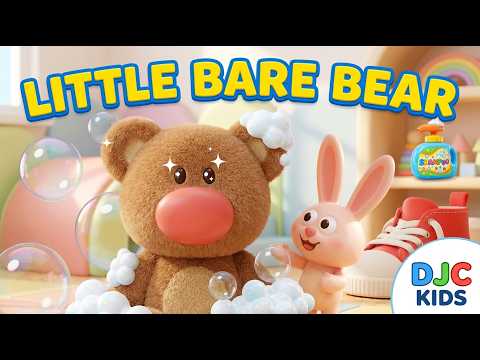
DJC Kids: an original children’s channel treated as a directed production for over a decade. Stories written, characters designed, animation directed, publishing run end to end.
Build an original kids’ property that can publish for years without losing its identity.
Character-driven stories with a consistent world: the same characters, the same voice, the same standard, upload after upload.
A locked series bible: model sheets for hand-drawn work, locked character profiles for AI work. One canon, every clip.
Publish at volume for a decade without drift. Move from hand-drawn 2D to AI-assisted 3D (Bob and Kale) without breaking character.
Hand-drawn 2D origins; AI-assisted 3D pipeline with locked references; YouTube as the distribution system.
Story → character lock → production → review → publish. Every upload reviewed before release.
261.5M+ lifetime views, 288K subscribers. Consistency beat virality, every year.
Keeping a series on model is a publishing discipline first and a technology problem second.
Eleven years owning content, brand and proposals inside an established technology solutions and managed services provider.
Give a B2B technology company a recognizable visual identity across every touchpoint, and keep it coherent as the company grows.
One visual world: brand refresh, website rebuild, campaign systems, event presence, all speaking the same language.
A defined brand system applied everywhere: web, social, sales tools, events like MISA BC 2026, paid campaigns.
Keep dozens of assets per month on-brand with a small team. Make technical subjects visually engaging without dumbing them down.
Web platform rebuild, Google Ads, social publishing systems, AI-assisted production for volume work.
Brand standards → templates → production → review. The system carries the consistency so the team can carry the ideas.
A coherent brand across web, campaigns, events and sales materials, maintained for over a decade.
Brand is a system, not a logo. The guidelines are only as good as the workflow that enforces them.
Articles, sales tools and social content that make managed IT and cybersecurity clear without losing the substance.
Explain complex technology to non-technical buyers, consistently, at volume.
Everyday metaphors for technical problems. The same instinct as the video series: make the abstract visible.
Editorial clarity: clean layouts, consistent voice, visuals that explain rather than decorate.
Volume without dilution. Dozens of pieces a month, each one accurate, on-voice and genuinely useful.
Content systems with reusable structures; AI-assisted drafting with human review at every stage.
Brief → draft → expert review → refine → publish. Accuracy is a creative constraint, not an afterthought.
A content engine that feeds web, social, sales and campaigns from one consistent voice.
Clarity is a creative decision. The best explanation is usually the simplest visual one.
Proposal production treated as a directed creative system, not paperwork.
Win complex B2B work with proposals that are persuasive, accurate and on-brand, under real deadlines.
A proposal is an argument with a visual system. Structure it like a story: the client’s problem, the approach, the evidence, the ask.
Consistent proposal design language: the brand’s voice and visuals applied to high-stakes documents.
Complex RFPs demand substantial reading, searching, organizing and drafting, on a deadline, without errors.
An AI-assisted workflow: Extract → Understand → Map → Research → Draft → Review.
Requirements → Knowledge → Strategy → Structure → Draft → Evidence → Review → Compliance → Approval. Each stage has a job, a source of truth and a quality standard.
A complex RFP’s first draft moves from hours of manual work to roughly 30 minutes. Less time assembling information; more time strengthening the argument.
Automation creates the capacity. Direction determines the value. The larger the production, the more important the system becomes.
The systems underneath the creative work: knowledge, workflow and approval infrastructure that lets production scale.
Make organizational knowledge usable for both people and AI, so production can scale without losing quality.
Build the system around the intelligence, not just the interface to it. A reliable reference layer everything else draws from.
Systems you can see: organized knowledge, clear workflows, visible approval gates.
Important information lives across documents, proposals, websites, presentations, emails and people’s heads. Generation is only useful if the underlying knowledge is trustworthy.
Interconnected company knowledge system feeding proposal, content and sales workflows.
Source of truth → shared context → repeatable workflow → human approval layer.
Knowledge that feeds production instead of sitting as a static archive. AI working from the organization’s actual language, services and history.
The production system starts before the prompt.
Active exploration of where creative production is going. Each experiment asks one question.
How do you maintain a recognizable character across multiple shots?
How do you separate camera movement from character generation?
What happens when you stop asking one model to do everything?
Can traditional cinematography concepts be translated into generative workflows?
What happens when locations, characters, lighting and props become computational?
What parts of editorial decision-making can be systematized?
How does AI change the relationship between image, music and sound design?
Can an AI agent actually participate in a production without flattening the creative process?
Treatments, storyboards, styleframes, and process work, available on request.